Behinto
Designing a national AI healthcare assistant — a medical companion grounded in documents prominent Iranian physicians have vetted.
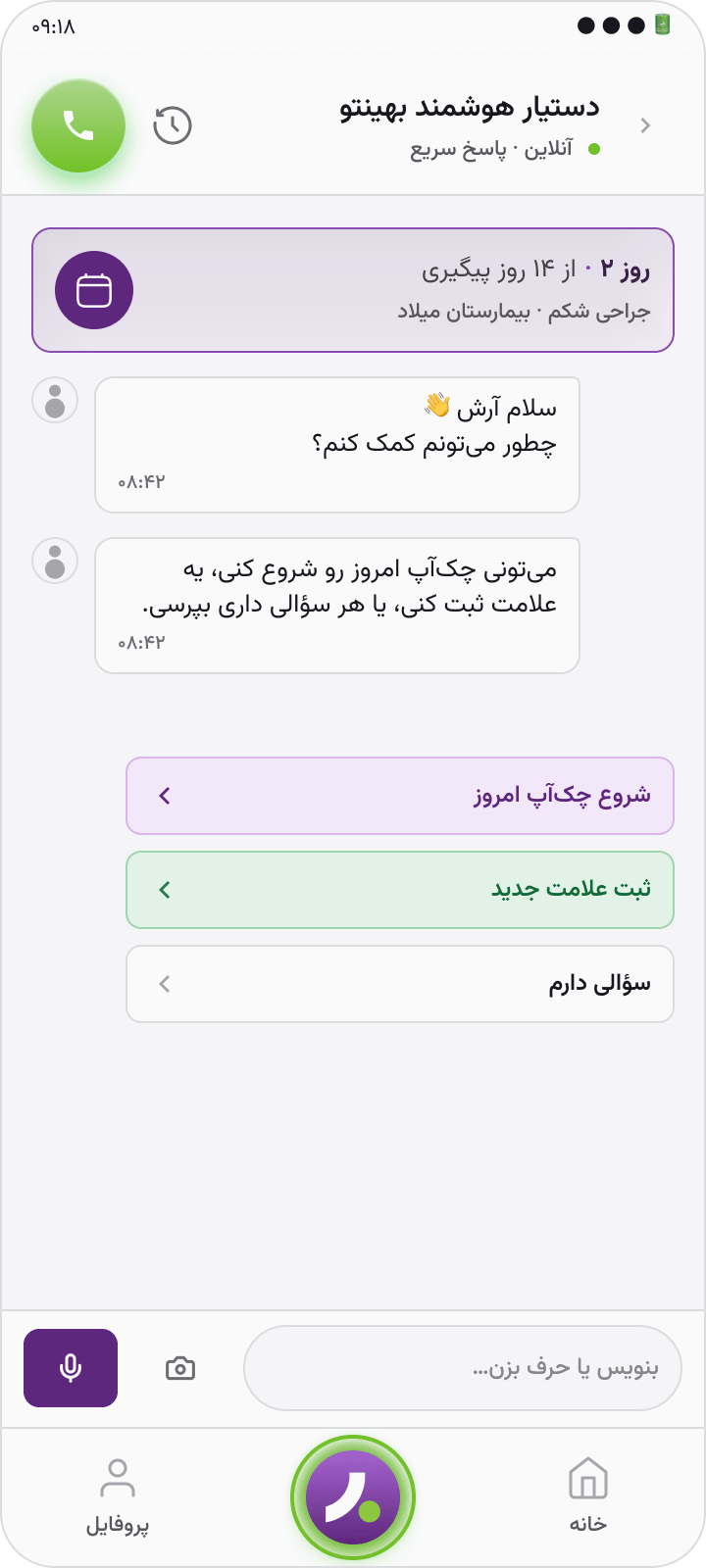
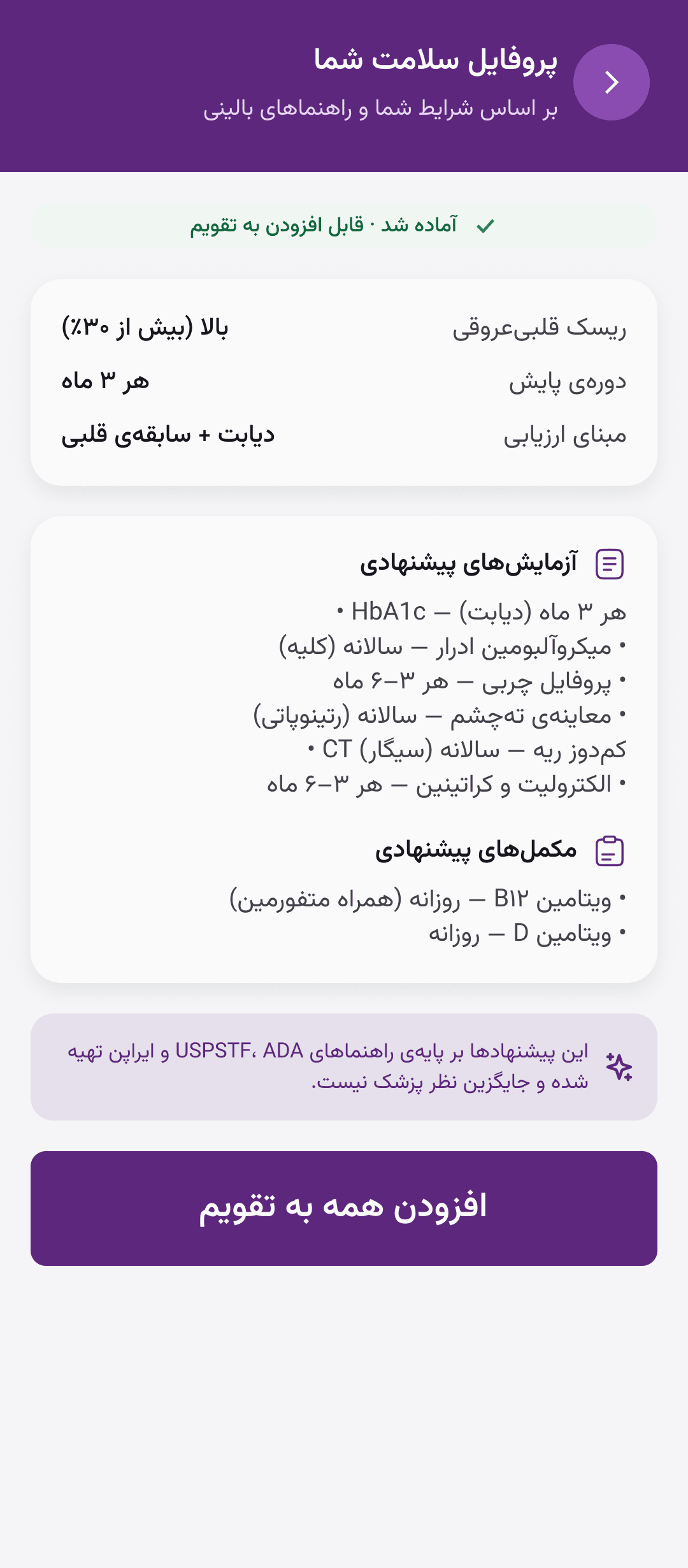
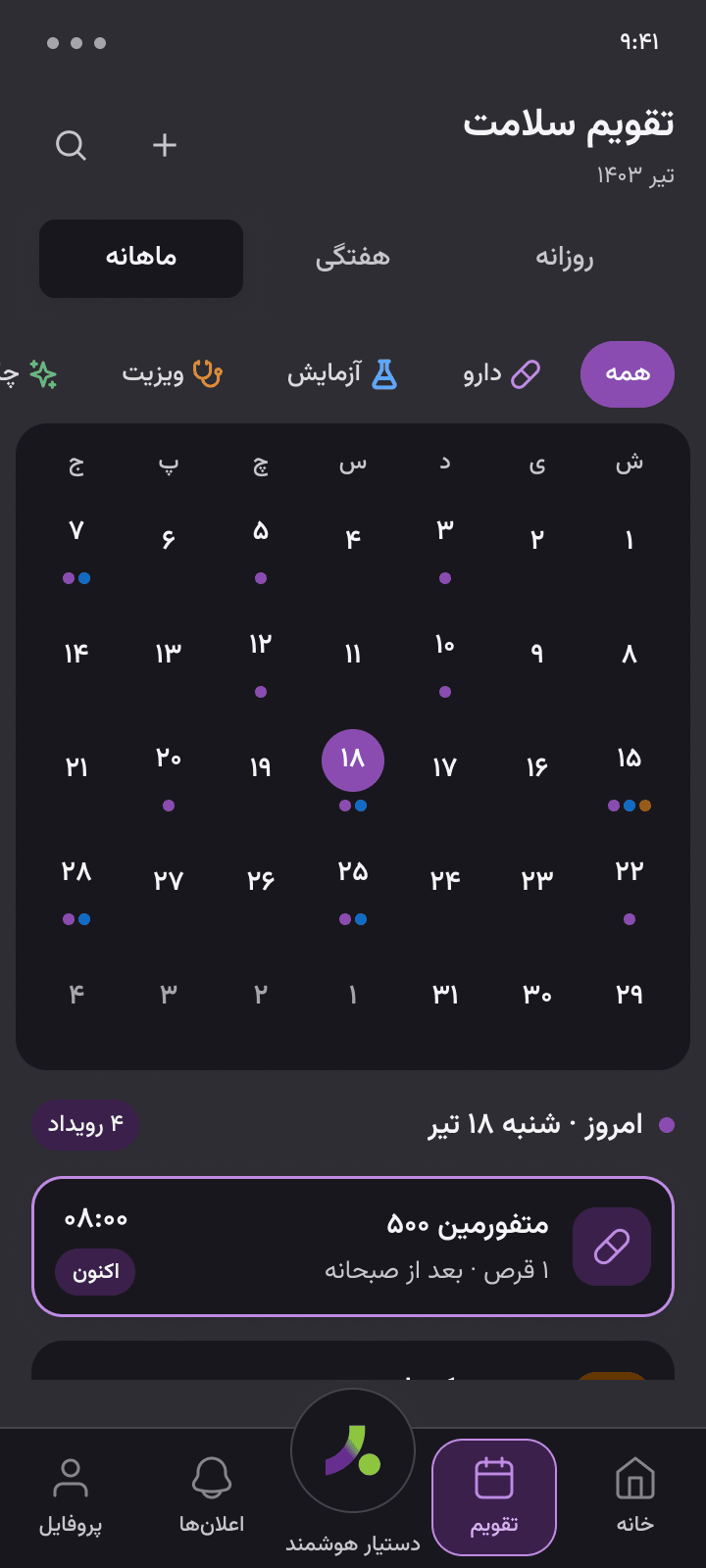
A national, reliable AI healthcare application whose answers are grounded in vetted, current medical documents — built to a standard practicing doctors and the Health Ministry can accept.
Clinician-facing workflows cover patient records, appointments, medications, and charting; the consumer-facing side is in progress. The customer is a team of prominent Iranian doctors — the product and the holding company share the name Behinto.
Generic AI chatbots are unacceptable for medical use.
Behinto's challenge is trust: an AI product whose answers doctors will stand behind — in Persian, for a national audience. That means an interaction model where the source of every answer is legible, and where the interface itself signals reliability rather than the improvisation of a general-purpose chatbot.
Design the trust before designing the chat.
The AI interaction model, clinical workflows, and the RTL system.
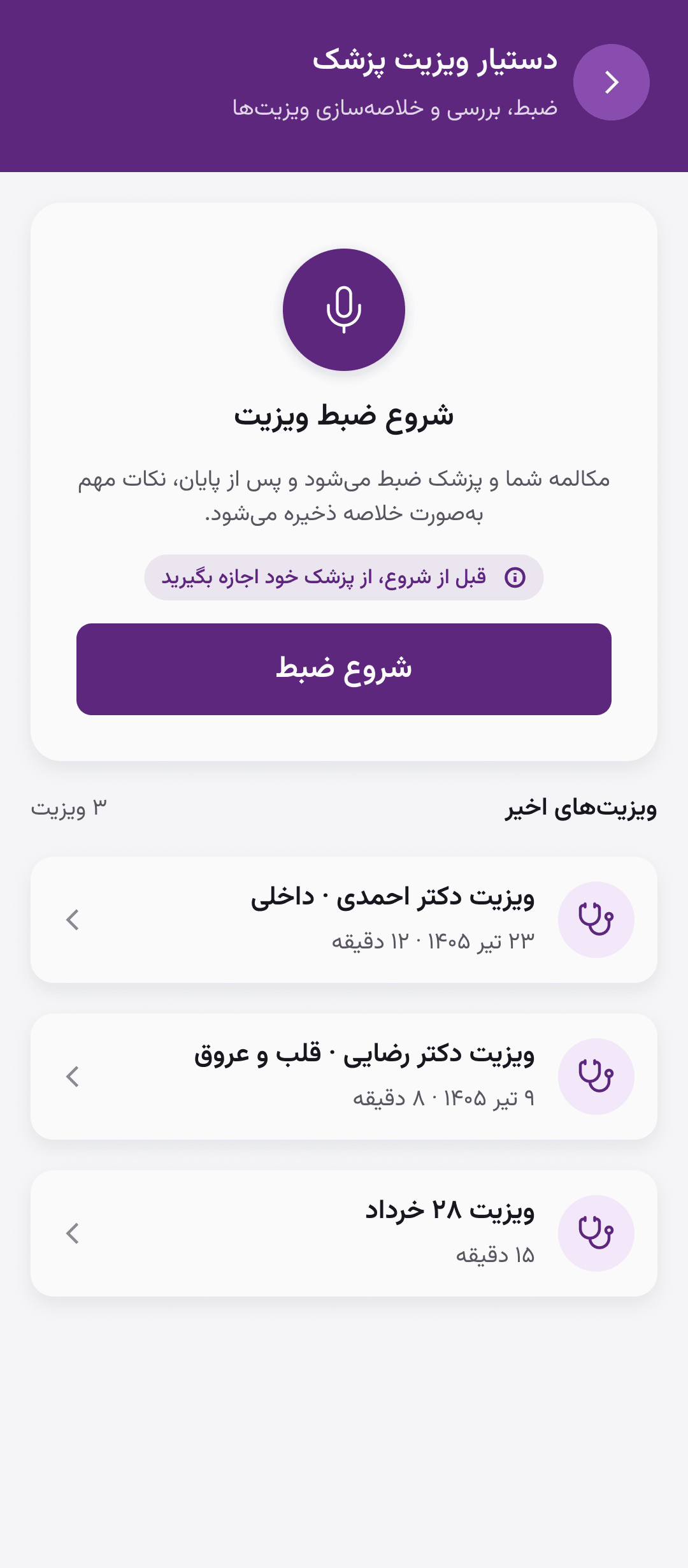
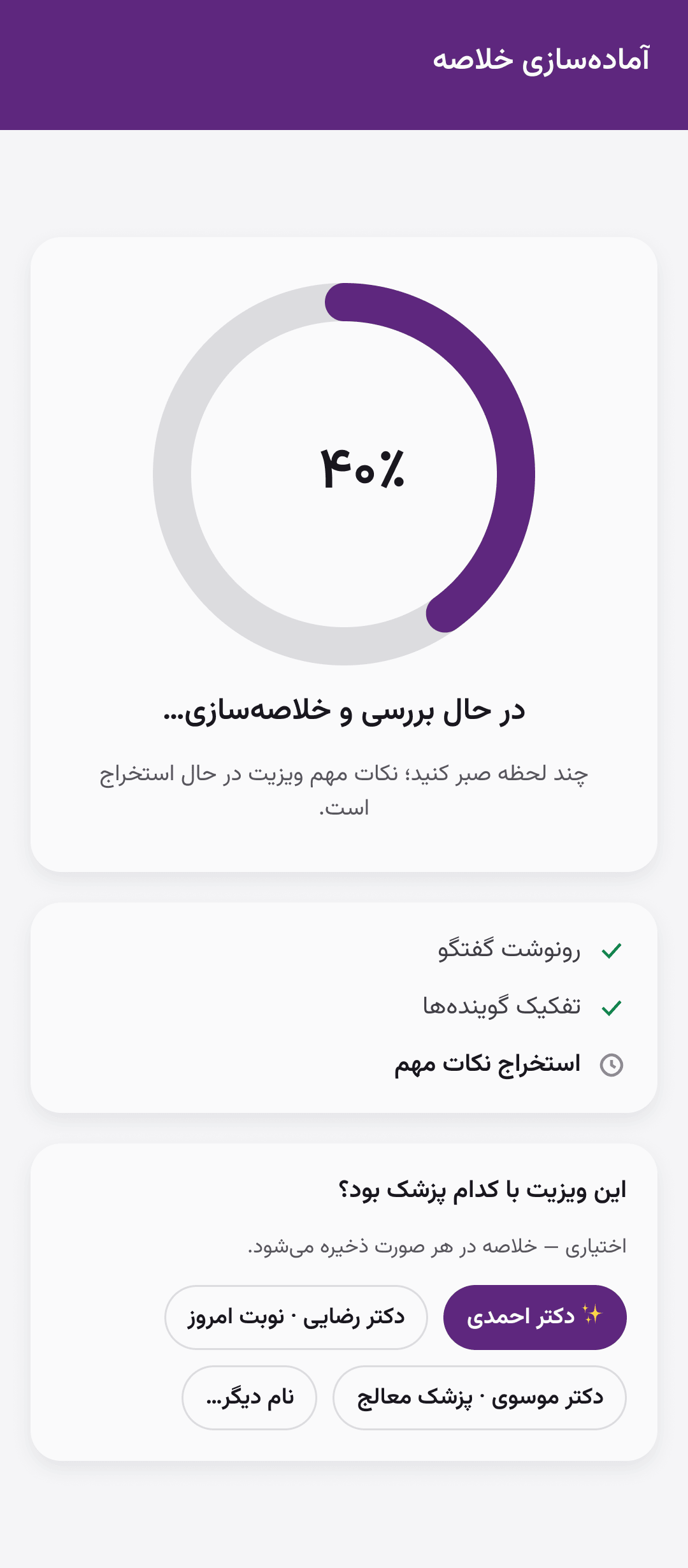
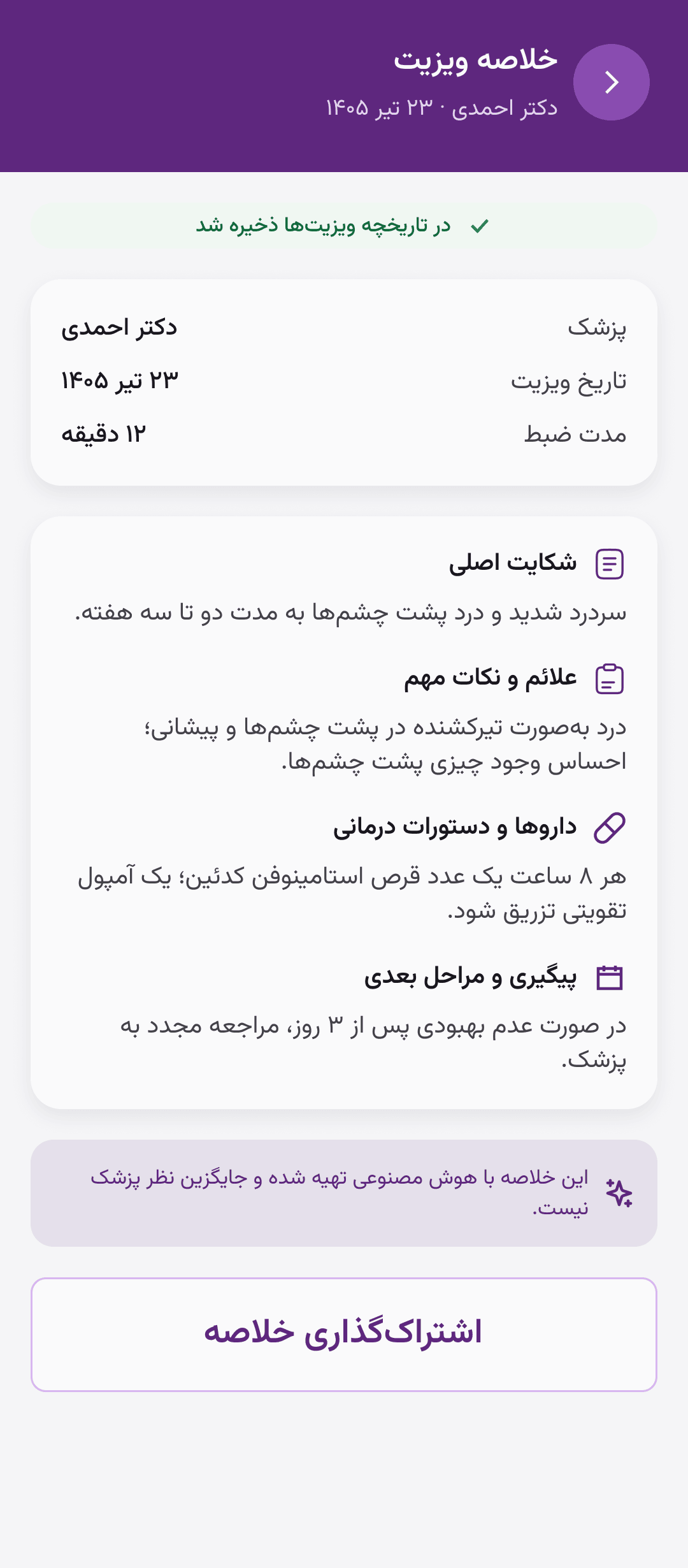
The consultation is recorded with explicit consent, transcribed and diarized on review, then distilled into a structured summary — chief complaint, medications, follow-up — the patient can keep or share. The AI never stands in for the doctor, and every screen says so.
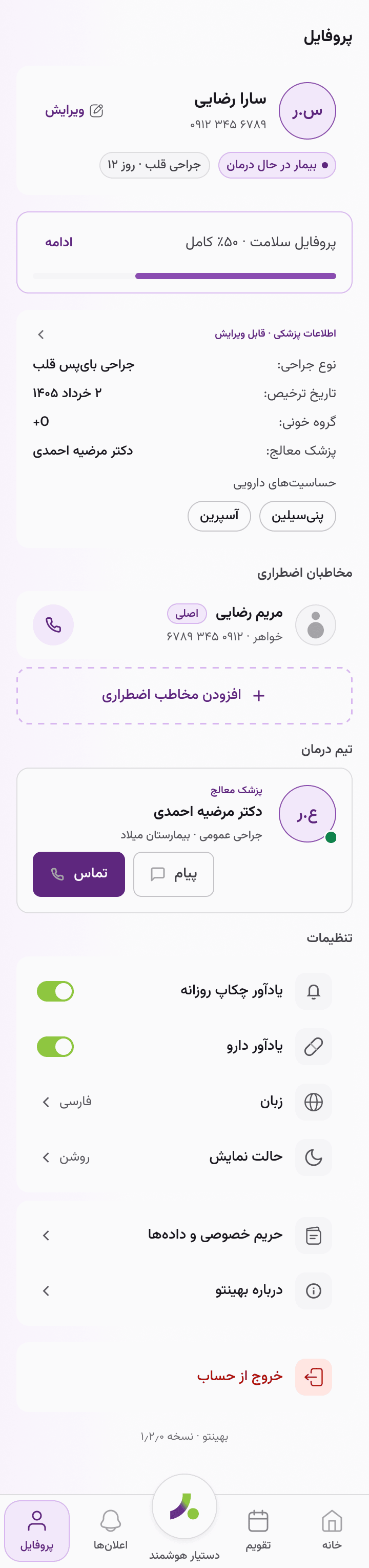
The everyday home surface and the patient profile — vitals, medications, care team, records, and the daily check-in — built Persian-first and RTL-first across first-class light and dark themes on a WCAG-AA-calibrated token system.

Launch is targeted for late 2026. During the hospital pilot I gathered feedback in person from discharged patients. Outcome metrics are launch-pending — this case study will be revisited with numbers once Behinto is live.