Medio
A four-panel healthcare system — patient, physician, medical centre, backoffice — designed coherently enough for a fully outsourced dev team to build without logical gaps.
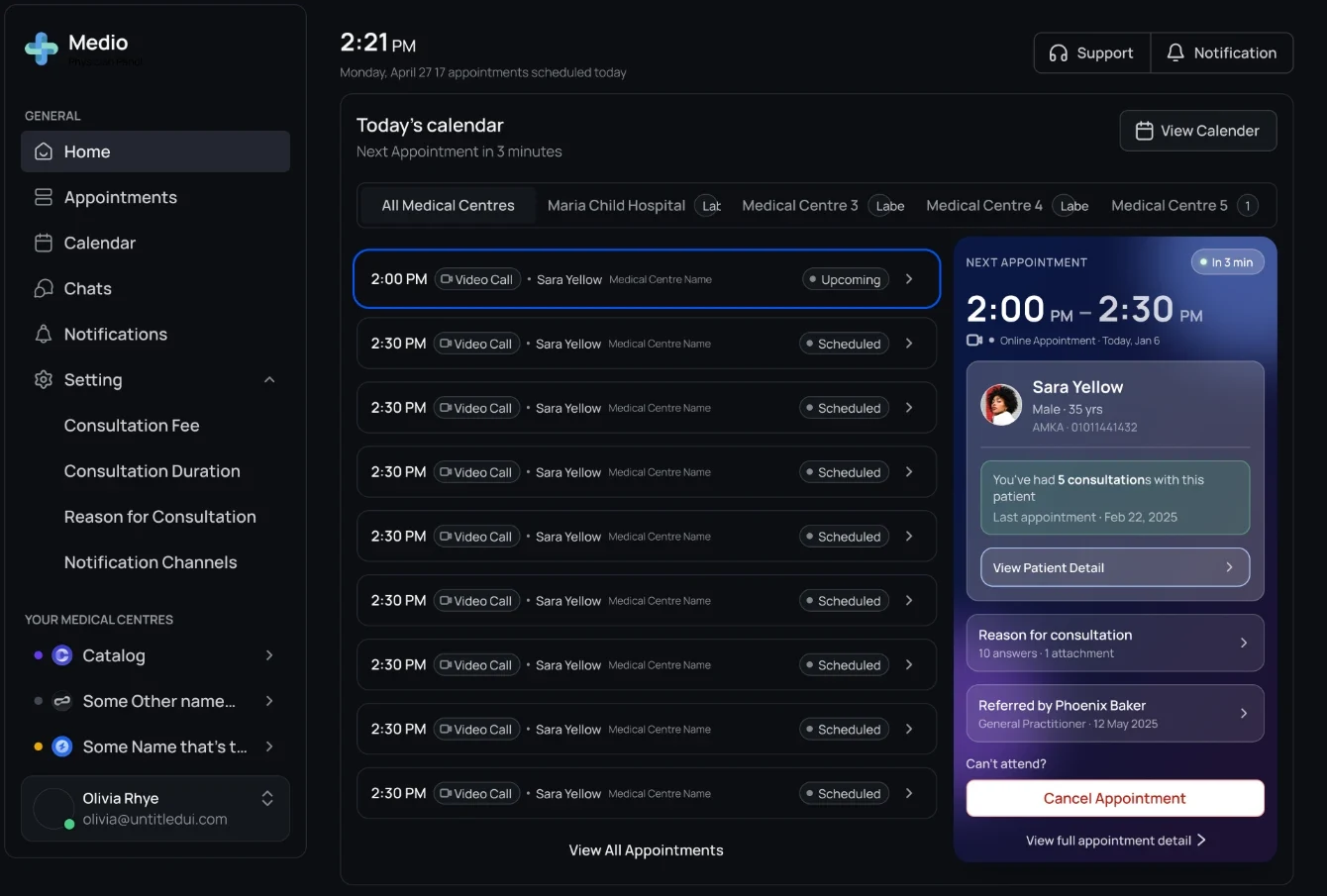
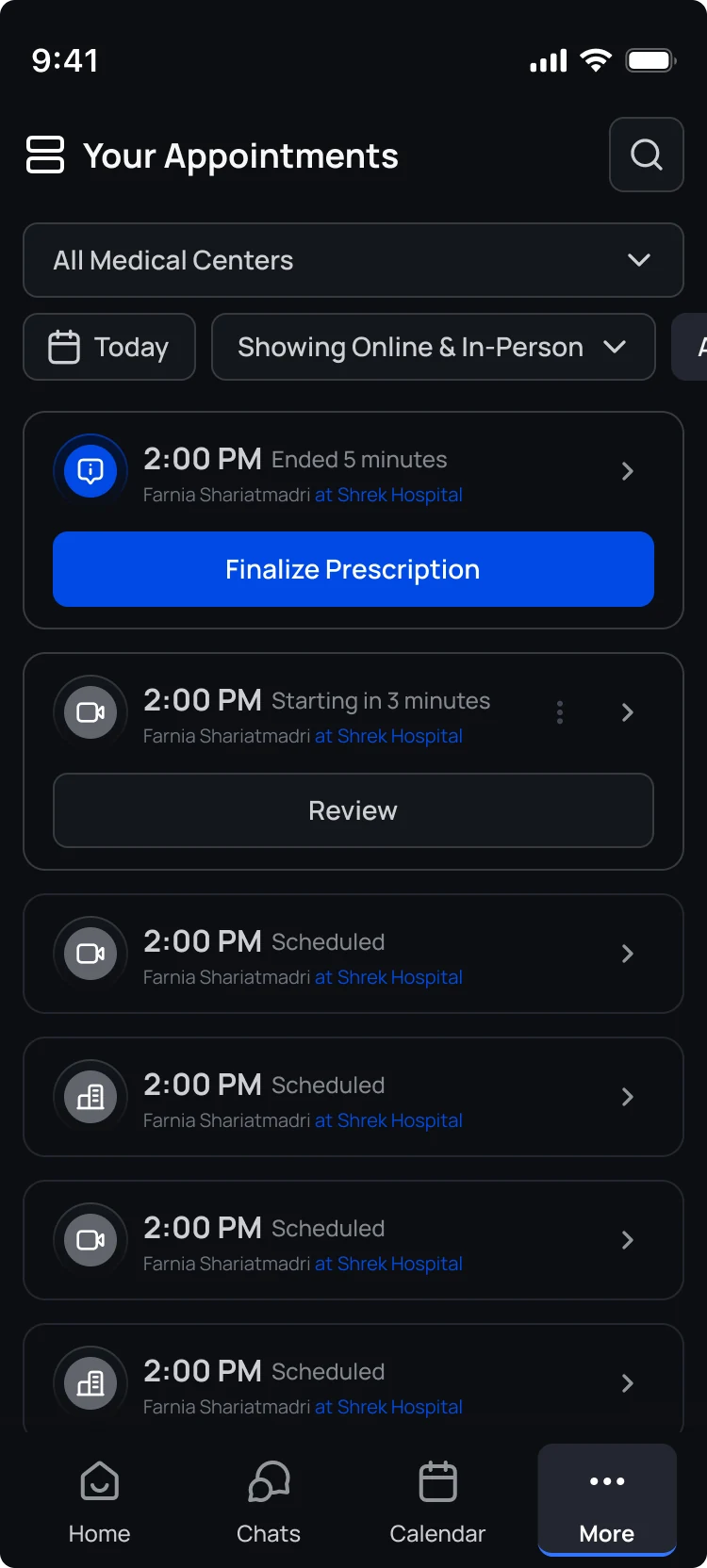
A platform managing the full care system — booking, appointments, prescriptions, shift and staff management, fee management — up to government-level coordination.
Four panels serve four very different user types: Patient (mobile-leaning), Physician (desktop web), Medical Centre, and Backoffice. Medio has two designers. I owned the physician and medical-centre panels end to end and designed the patient side's key journeys, from booking to major redesigns.
Undefined problems, an outsourced team, and no room for logical gaps.
Most flows started as unknown, undefined problems. Development was outsourced, so any logical inconsistency in the design would surface as a broken product. And the system had to feel uniform across four very different user types.
Turn ambiguity into flows an outsourced team can't misread.
Flows that cross panels, and the workspace they land in.
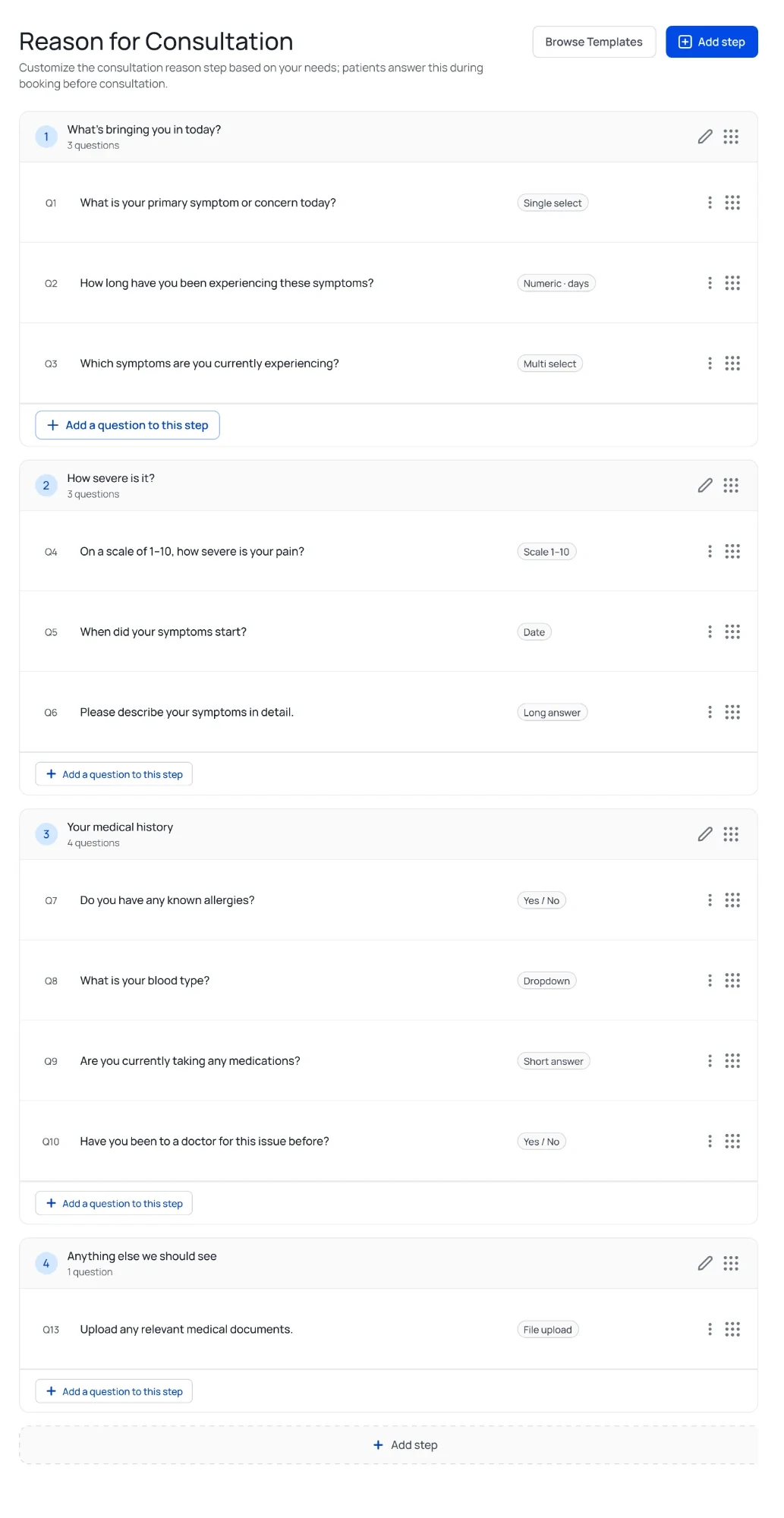
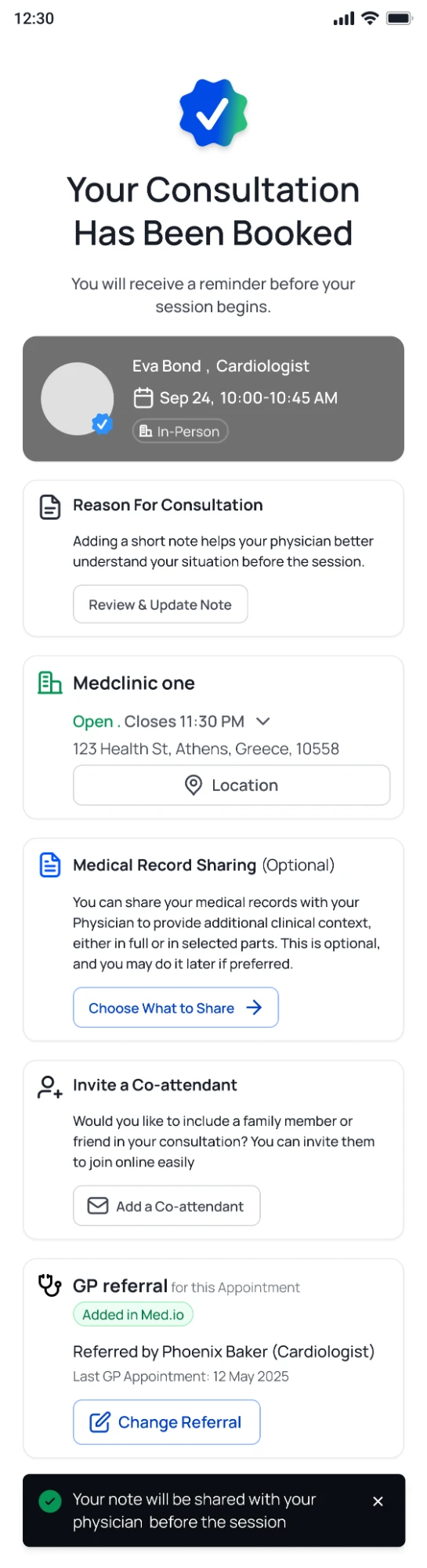
Physicians write their own pre-consultation questionnaire: steps of typed questions, from yes/no to file upload, or a template to start from. Patients answer it while they book, one step at a time, and can skip it. The answers are waiting on the appointment before it starts, beside the patient's history and their GP's referral.

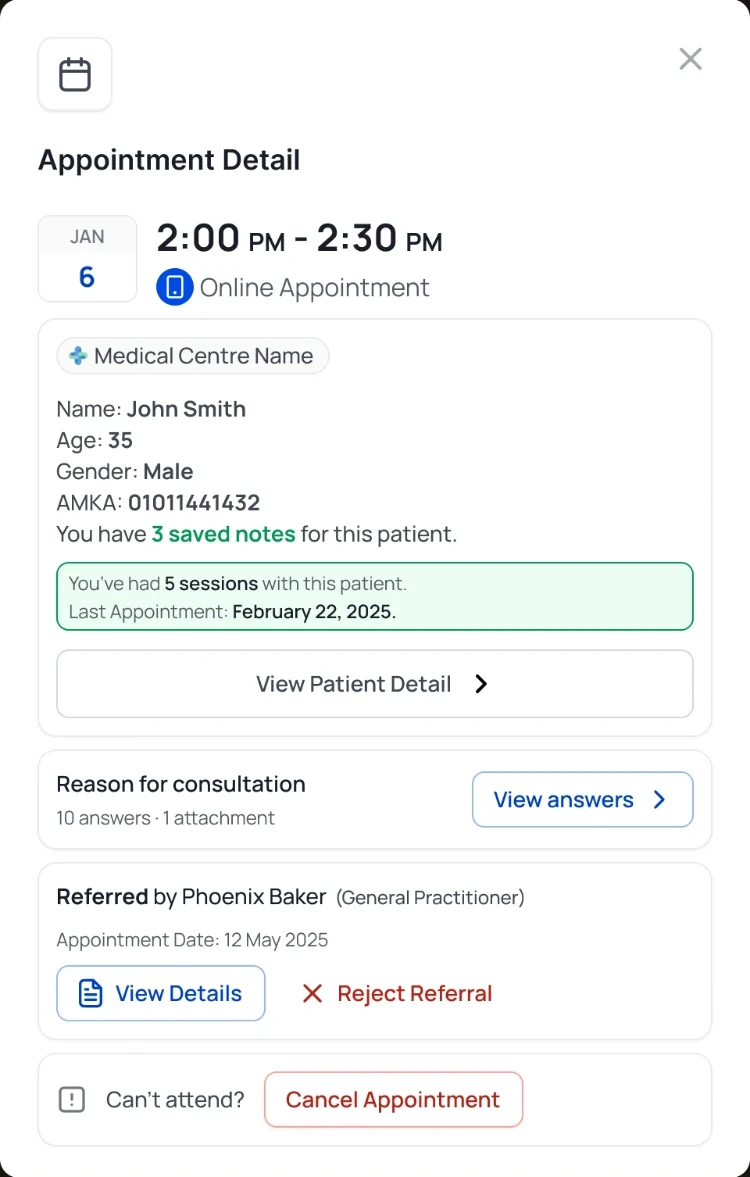
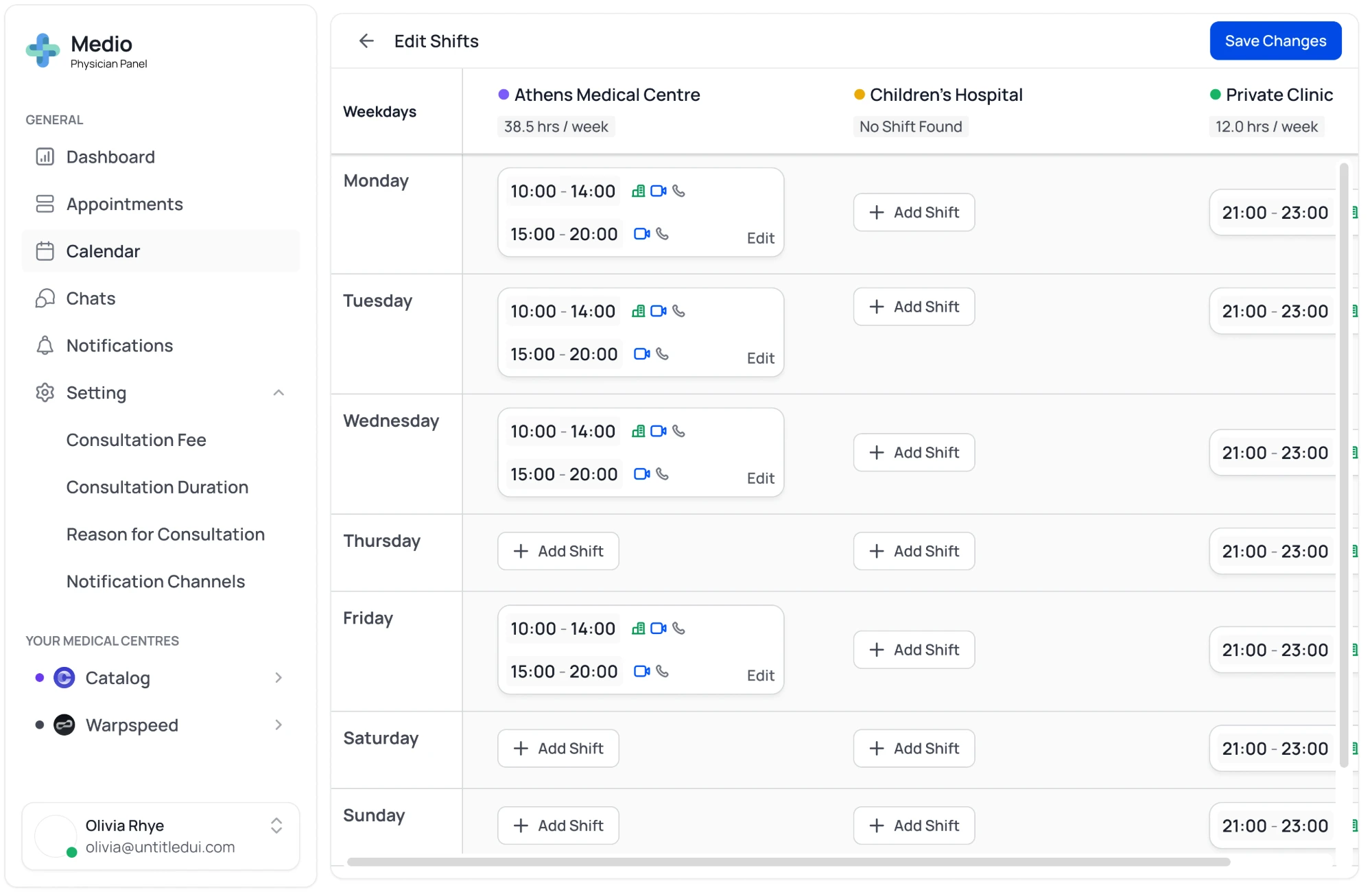
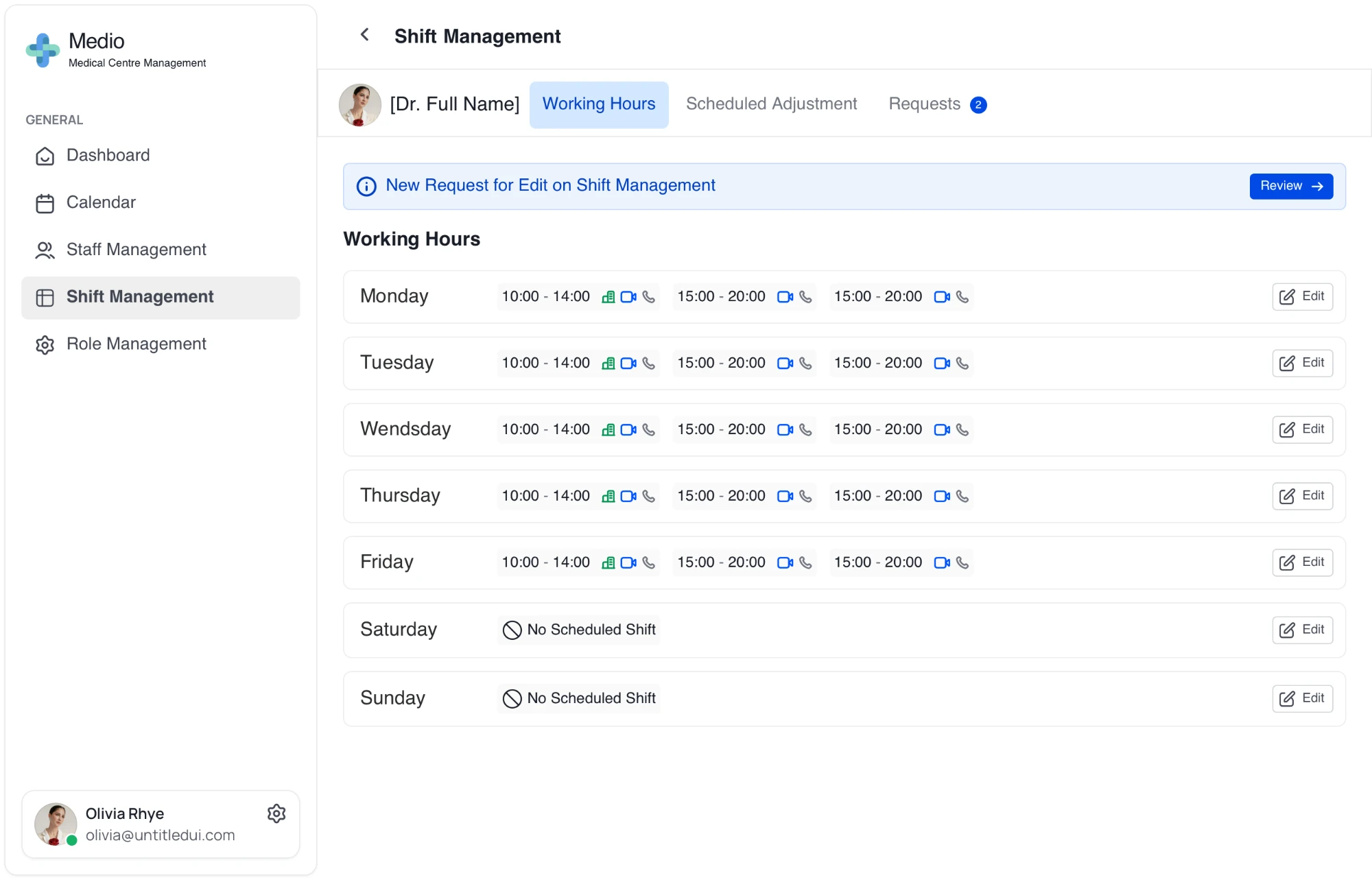
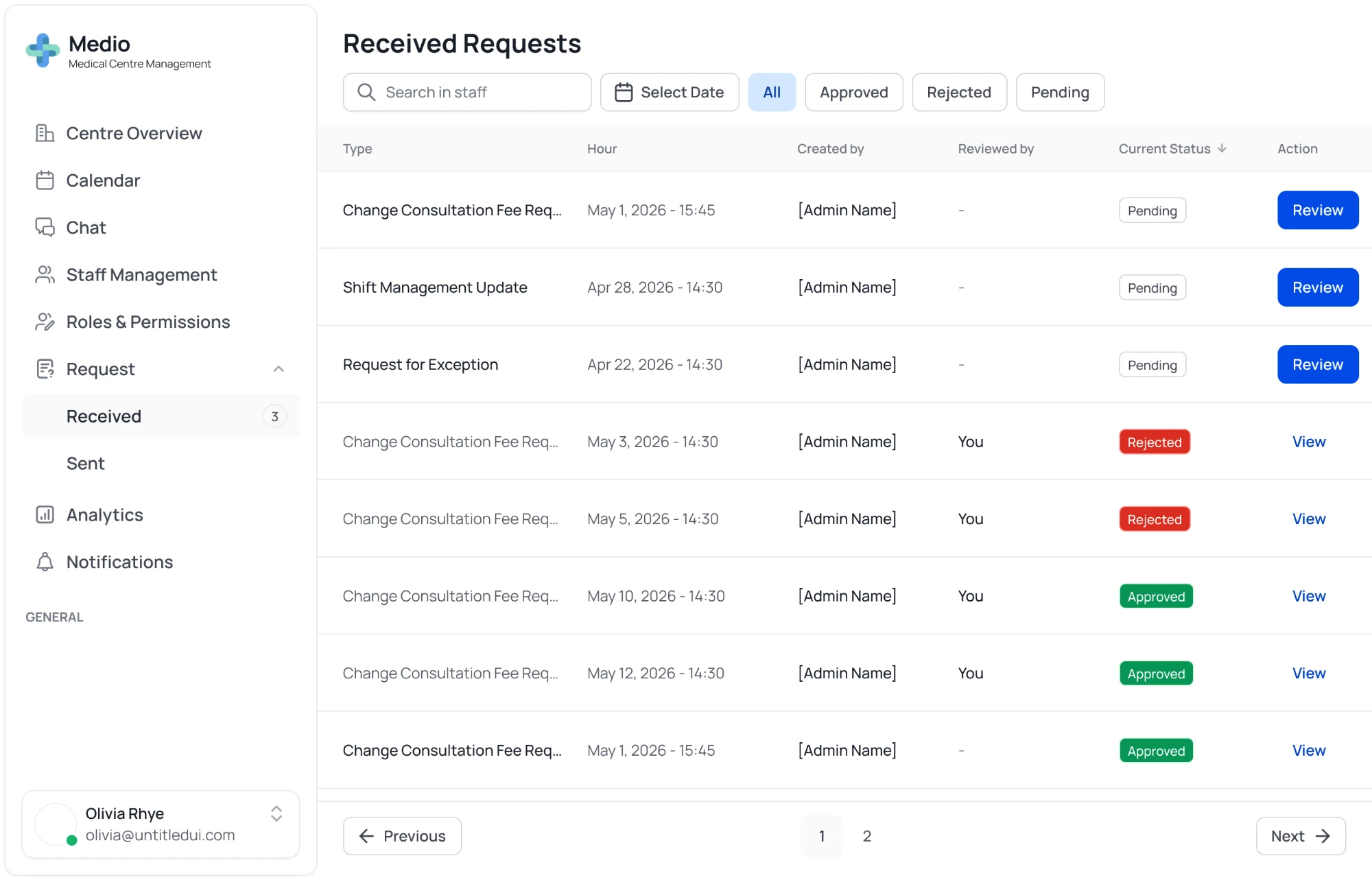
A physician can work at several medical centres, so hours and fees are set per centre: one weekly grid with a column for each, and a fee for every centre and consultation type. The centre manages the same schedule from its side — each doctor's working hours, and an inbox of fee, shift and exception requests, approved or rejected, with who raised and who reviewed each one on record.
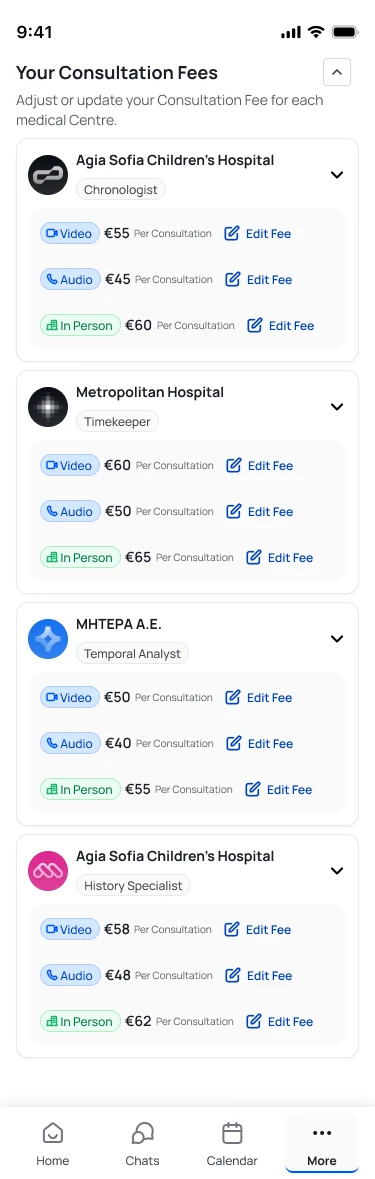
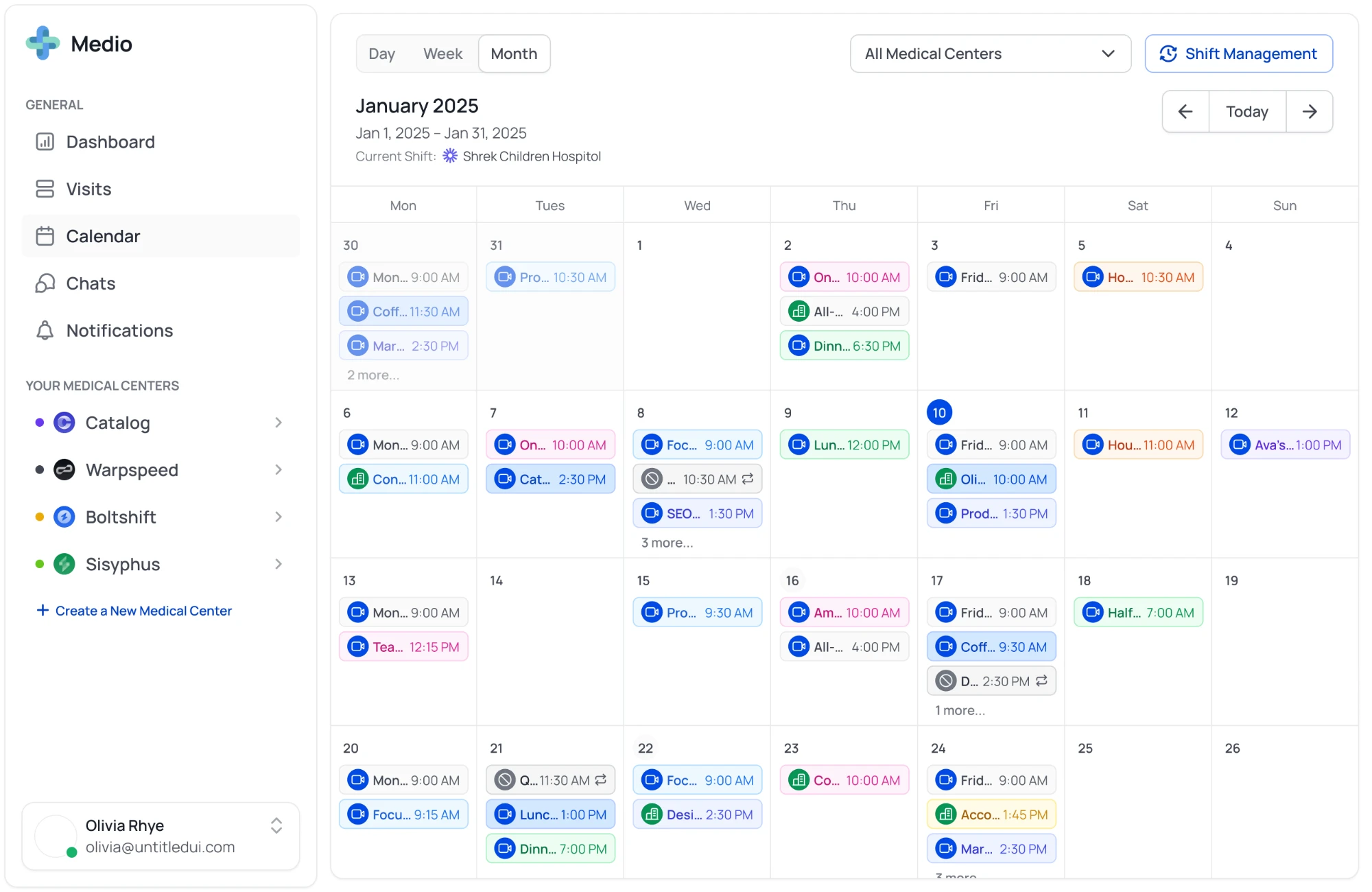
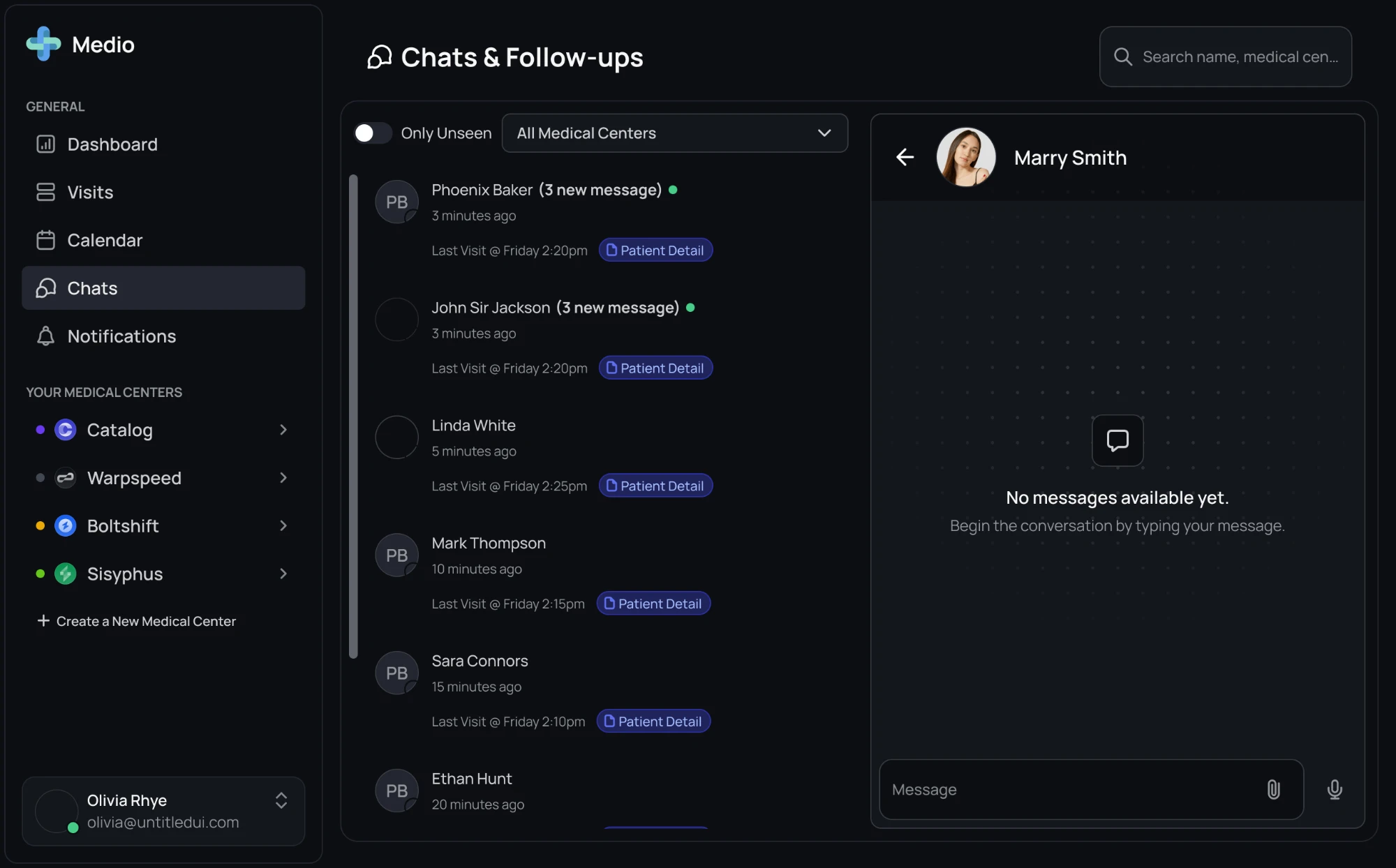
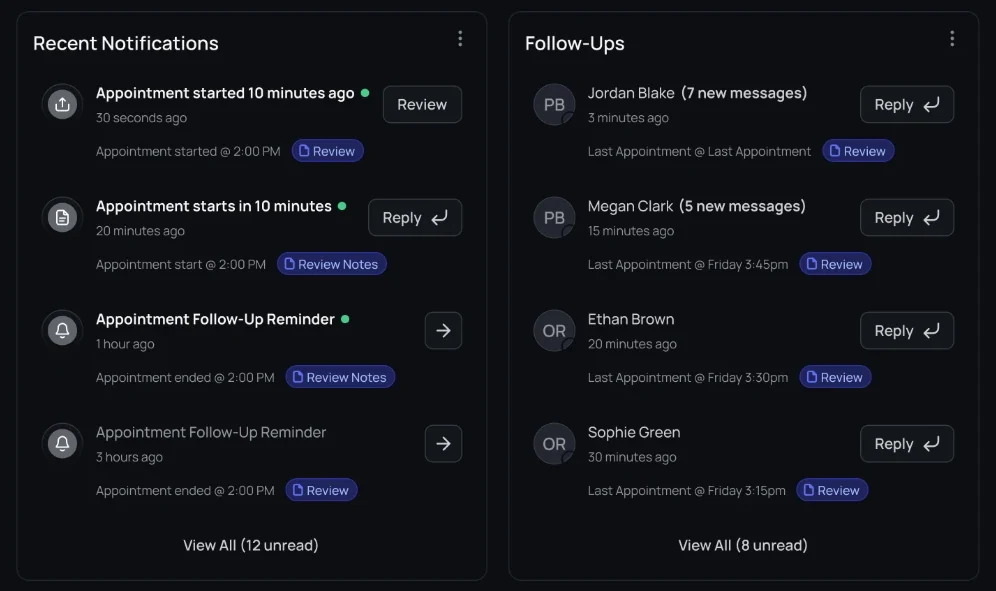
Calendar, chats and the day's dashboard, on desktop and mobile, in light and dark. Each one filters by medical centre, because one physician's day can span several, and the three consultation types — in person, video, audio — carry the same icons on every panel.
Market launch is expected in 2027. Outcomes are launch-pending — this case study will be revisited with numbers once Medio is live.